June 30, 2026
Why Am I So Drained After Being Around People
There is a kind of tiredness that nothing physical explains. Not the tiredness of the muscles or of a sleepless night, but the one that falls over you after an evening that was perfectly pleasant, after a few hours simply spent among others. You come home emptied, unsure why, and you end up blaming yourself. That tiredness is real, and it has a cause. All that was missing was a word for it.
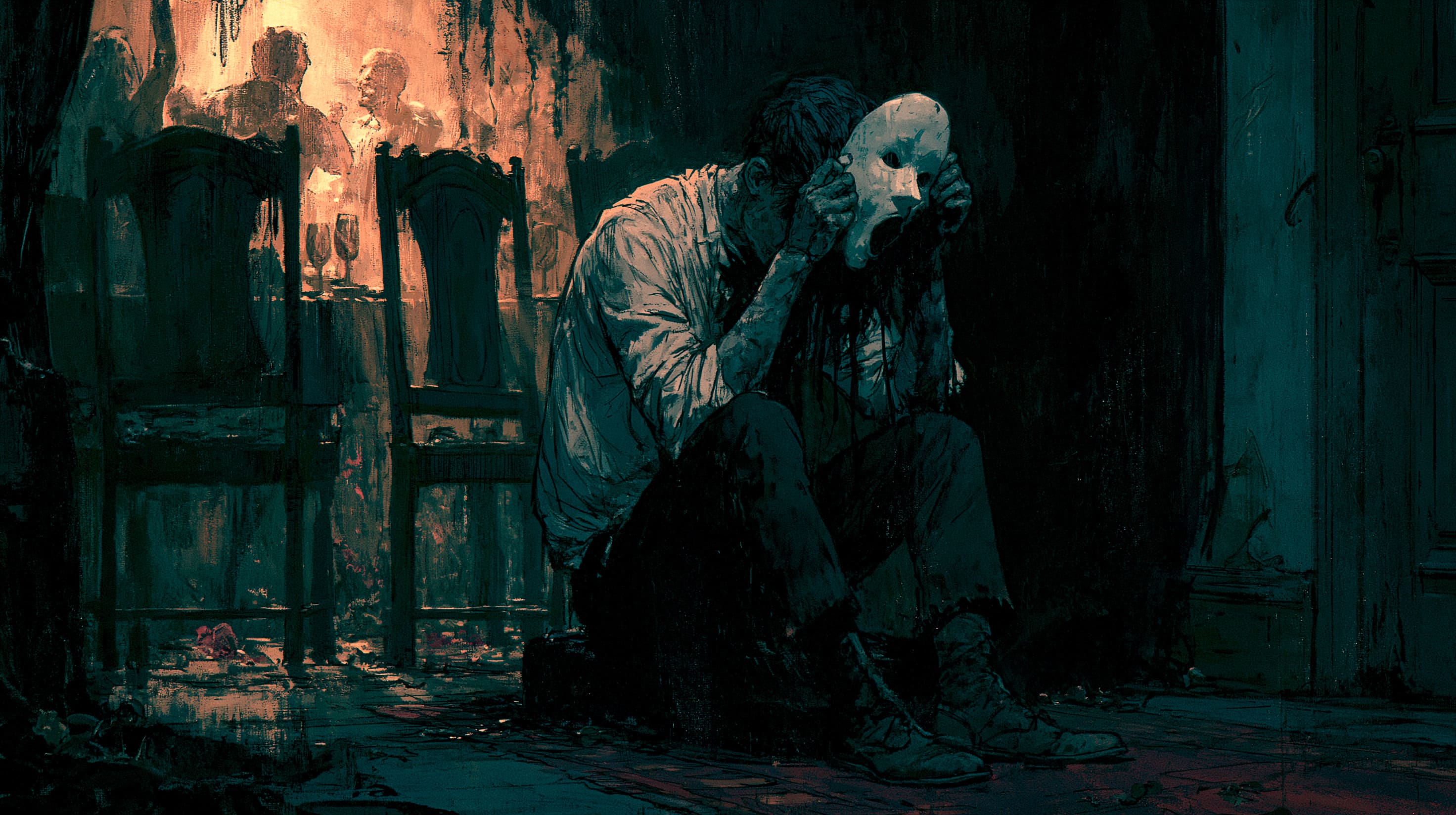
A cost no one ever bills
To understand this exhaustion, you have to give up a common assumption: that talking with others is natural, free, restful. For many people it almost is. But that "almost" hides work, and work has a cost, and the cost has someone who pays.
A social encounter is not a simple exchange of information. It is a continuous performance. At every moment you must produce the right signals: the smile at the right time, the gaze that lasts neither too long nor too briefly, the nod at the expected intervals, the follow-up question that proves you are listening. None of this is taught anywhere, and that is exactly how you can tell where it comes from. No one teaches the precise length of a glance, or how much of yourself a "how are you" allows. Most people received it without asking, along with their first language, and they run it without thinking. For them the cost is low, almost nothing. But it exists.
When the cost is not nothing, it shows in its effects. You then have to decode what is really being said beneath what is said, calculate what should be answered, monitor your own voice, measure your intensity, translate your inner experience into an acceptable surface, without pause. This work runs in parallel, for the whole length of the bond. It is the work of an interpreter who is also the speaker: talking, translating, checking how it lands, correcting. And when the evening ends, that person walks out as if from a trial, while the others spent nothing.
Communicating, or synchronising
We call all this communication, and the word lies by being too noble. In its social use, to communicate does not mean to transmit something true. It means to synchronise. A large share of the sentences exchanged in a day carry no information at all: they only confirm that the bond holds, that we are speaking, that we belong to the same circle. The content is the vehicle; belonging is the cargo.
For anyone who receives this mechanism without the filter that lightens it, every conversation becomes an examination where, for others, it is a game. This is not a matter of shyness or goodwill. It is a matter of real, continuous effort, spent on a task most people carry out without even knowing it exists. And to be fair: those who play are not cheating. They do not know they are playing, and that is precisely the mark of a successful socialisation. The reproach is not aimed at them. The question rises higher, toward the arrangement itself: why does it take so much theatre for people to stand one another?
The mask, that invisible labour
There is a name for this continuous translation of oneself into compliant signals: the mask. Not a disguise you put on in the morning and take off at night, but a permanent operation, carried out in real time on yourself. To feel, and at once calculate the expression to produce. To think, and ration what the thought may show. To understand, and check that you are displaying the expected understanding.
The cost of this mask appears on no statement. Yet it adds to all the others: to the sensory load of a noisy, over-lit place, to the effort of decoding what each person really means. It is a cost laid on top of costs. This is why fatigue sometimes comes before the interaction even begins: you arrive already drawn down where others arrive fresh. And this is why the rest that follows is not laziness. It is the only way to restore what was spent without a witness.
It must be said plainly, because the confusion wounds: this tiredness is not a lack of sociability. You can love people deeply and come out of their company exhausted. The two do not contradict each other. It is often the mark of a presence too whole, not of an absent one.
What this tiredness reveals about the world
One might think this exhaustion concerns only a few, the most sensitive, the autistic, those said to be out of step. That would be inexact. They no doubt pay the full version of it, every day, without respite. But the age hands a diluted version of the same ailment to everyone.
The contemporary world has multiplied the surfaces on which we must render ourselves legible. Screens ask for a performed presence even in private, work demands a permanent representation, the slightest exchange leaves an observable trace. Everyone now feels, to some degree, this fatigue of having to be other than oneself. Social tiredness is not the infirmity of a minority in a healthy world. It is the point at which a world turned theatre finally becomes tangible, even to those it used to spare.
Naming this tiredness does not remove it. No word refunds a cost. But the name strips the ailment of its last comfort, the comfort of passing for a private matter, a personal weakness to be ashamed of. What you feel after being around people is not a manufacturing defect. It is the trace of real effort, spent in a world that has forgotten it was asking for it.
Then one question remains, and it is worth more than any technique for managing your social energy. If being together costs this much, perhaps the breakdown is not to be sought in each of us. It is in what we have made of the bond.