June 30, 2026
"Just Be Yourself," the Impossible Command
We offer it like a gift, before an interview, in a moment of doubt: just be yourself. It is meant to set you free. Yet to some it brings no rest, but vertigo. For to hear it, you must first know who this self is that you are summoned to bring forth.
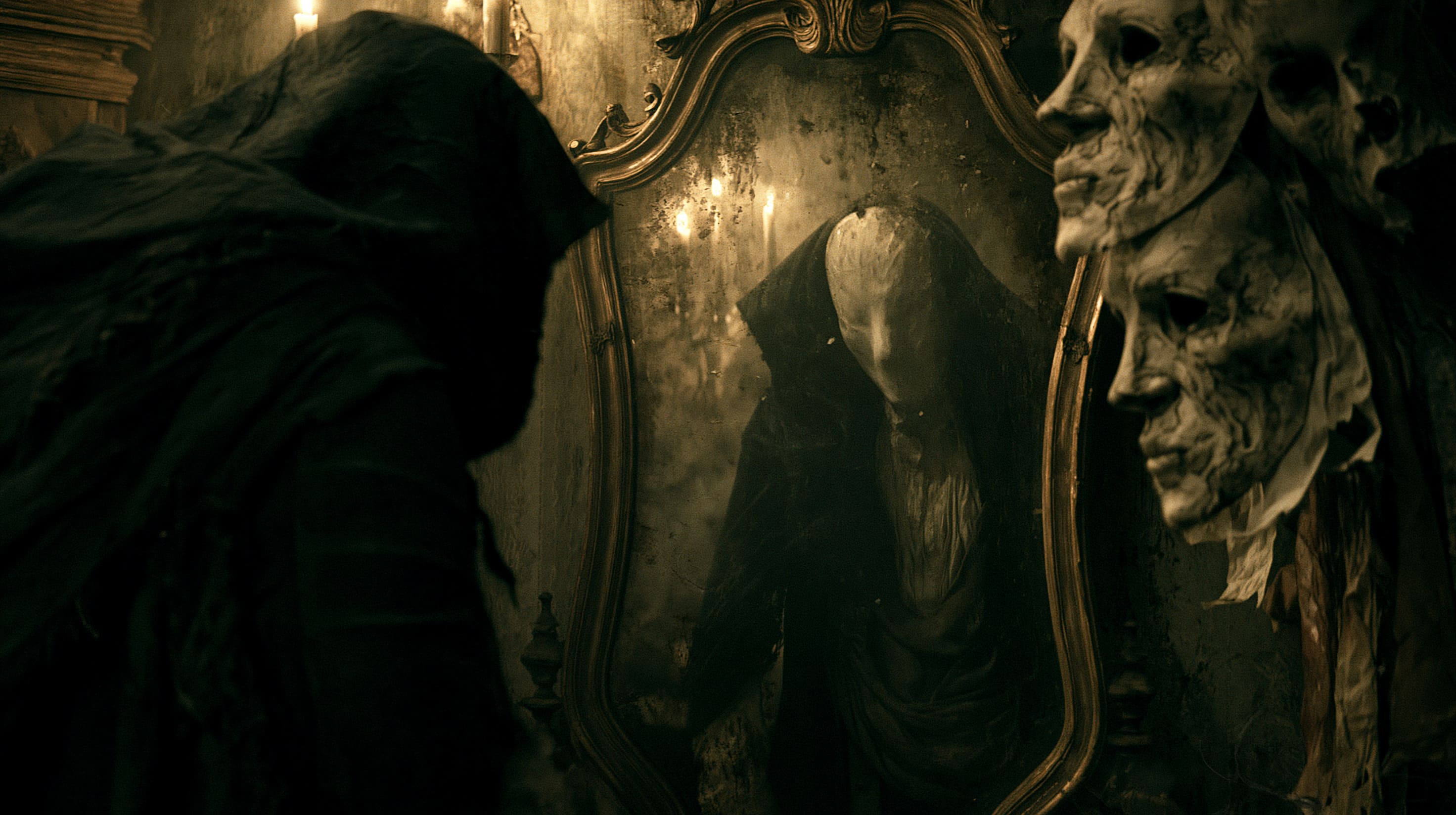
A phrase with no referent
Imagine someone who learned, very early, that their spontaneous way of being in the world would not do. They were corrected, reproved, flagged. So they built, piece by piece, a version of themselves that passes: the adjusted tone of voice, the smile produced at the right moment, the sentences prepared for recurring situations, the precision softened so their words become digestible. This work succeeded. Doors opened, reproaches grew rarer. The manufactured version works where the original failed.
To such a person, "just be yourself" means nothing clear. Which self? The one from before, of whom only fragments of childhood and sanctions remain? Or the one that years of effort built, which works, which others appreciate, and which is perhaps no one? The mask here has nothing left to hide: it has taken the place of the face. When the phrase falls, it does not set free, it points to a void. It assumes there exists, somewhere beneath the layers, an intact and available self that one need only let show. Nothing is less certain.
The natural is something you learn
The command rests on a belief that has to be examined: the one that opposes the natural, spontaneous and true, to the artificial, calculated and false. This opposition does not hold up under scrutiny.
What social life calls spontaneity is most often a successful repetition. A naturalness so well learned that it has forgotten itself. Those who seem the most authentic are not those who have no mask. They are those whose mask has so perfectly adhered, since childhood, that it has become indistinguishable from a face. Their ease is not the absence of a role; it is a role turned invisible. The proof is simple: real spontaneity, the kind that has never rehearsed, does not pass for authenticity. It passes for strangeness. The one who truly says what they think, without dressing it up, without calculating the effect, is not received as sincere. They are received as blunt, or clumsy, or too direct.
Here is the paradox the command conceals. Society does not reward authenticity. It rewards a certain performance of authenticity, coded, legible, conforming to what is expected of a true self. "Just be yourself" really means: produce the recognisable signals of someone who would be themselves. It is still a stage direction, simply better disguised than the others.
The industry of the true self
Our age has made authenticity a supreme value, and a market. We are urged to be true, aligned, faithful to ourselves, and a whole commerce thrives on the injunction: books, workshops, content, methods for recovering one's deep self. The irony must be seen. The more a culture demands authenticity, the more it turns it into a norm to attain, and therefore into one more performance. The true self becomes a posture to hold, judged by others, who will decide whether you are authentic the way they would judge any role.
For anyone already carrying the fatigue of making themselves legible, this new demand is a mask added to the masks. After the mask of normality, which had to be learned so as not to disturb, comes the mask of authenticity, which must now be displayed to be deemed sincere. Two opposite costumes on the same hook, and still no room for the bare self.
Beneath the mask, the question
Should we conclude there is nothing beneath the mask, that all is only role? That would be too easy an answer, as false as the opposite consolation. Beneath the mask there is no intact face waiting to be freed. But neither is there nothing. There is the question itself, turned flesh: a person who no longer knows with certainty where the strategy ends and where they begin.
It is there, perhaps, that a truer truth stands. The good news is not that it would be enough to remove the mask to find oneself. It is that one can stop believing the command. One can give up the search for the authentic self as a hidden object, and accept that identity is not a thing you discover but a question you inhabit. On that day, "just be yourself" loses its power to wound. Not because you have finally answered it, but because you have understood that the phrase asked a false question.
And then a more modest demand remains, and a more tenable one, than authenticity as spectacle. Not to be yourself, a phrase without a referent, but to stop being forced to betray yourself. It is little, and it is already a great deal. A world that allowed it would no longer need to keep telling everyone they must be themselves.